
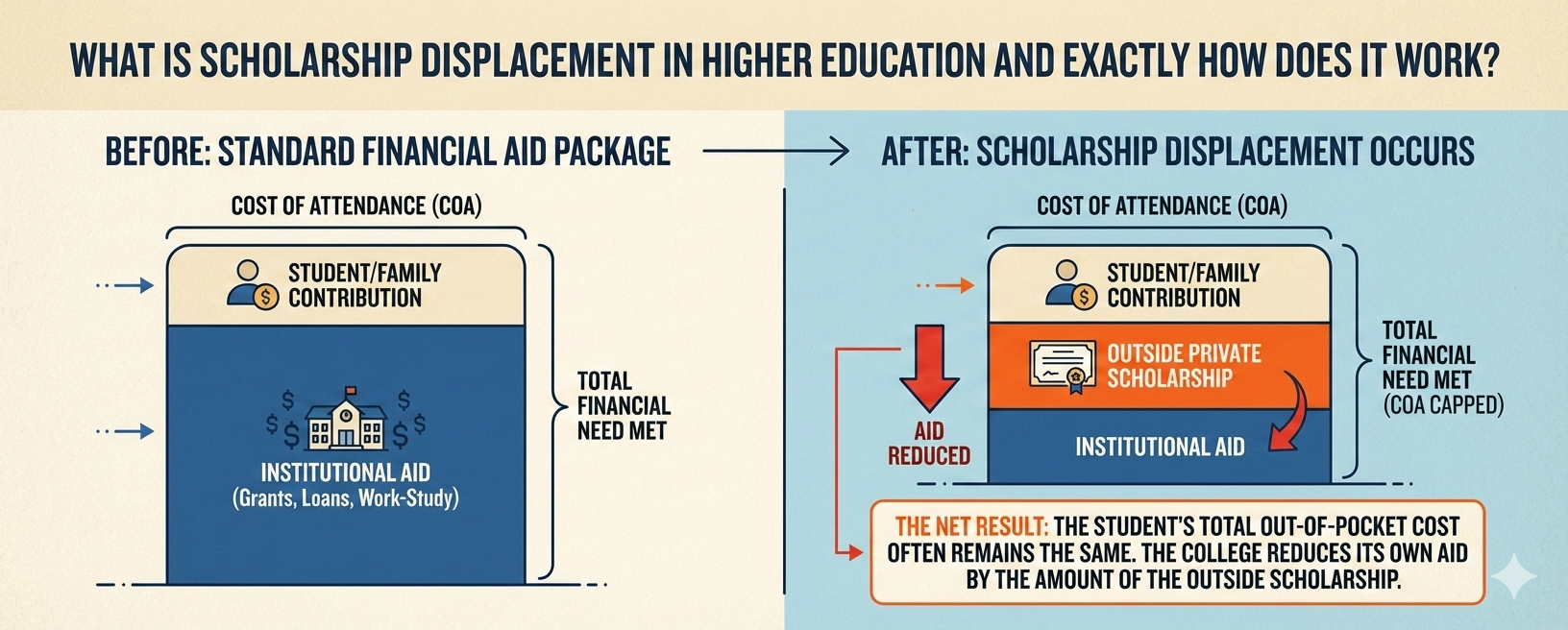
Scholarship displacement occurs when universities reduce their institutional aid—such as grants or merit-based awards—upon learning that a student has secured external scholarships.
This practice ensures the total financial package does not exceed the student’s demonstrated need or the institution’s calculated cost of attendance (COA), which encompasses tuition, fees, housing, meals, books, and miscellaneous expenses.
The net effect?
The student’s out-of-pocket costs remain unchanged; the external award merely replaces university funds.
Why Do Colleges Practice Scholarship Displacement?
Universities engage in this for pragmatic reasons. Primarily, it allows them to redistribute limited resources to a broader pool of students, maximizing aid equity across the enrollment.
Budget constraints compel such measures—federal regulations prohibit over-awarding, where aid surpasses need or COA, to prevent misuse of funds.
However, critics argue it disincentivizes diligence, as enterprising students see no reduction in their bills despite earning private scholarships.
Can Students Amass More Scholarship and Grant Money than the COA?
In principle, no; total aid packages are capped at the COA to comply with federal guidelines. If incoming funds threaten to exceed this threshold, institutions adjust by displacing other aid components, often prioritizing the retention of loans or work-study over grants.
What Happens to Extra Money?
Exceptions can arise. Should scholarships and grants cover direct billed costs—like tuition and housing—then, with the surplus remaining, universities typically issue refunds to the student.
Although students must spend these extra funds on qualified educational expenses, such as books, supplies, or transportation, misuse could trigger tax liabilities or repayment demands.
So, proactive planning is essential—consult the financial aid office early to navigate these dynamics and preserve the full value of all awards.
Leave a Reply