
Colleges use amenities, extras, and polished images to persuade students and their parents, but these may still not be enough to make it a good or successful experience because there are two other critical factors…
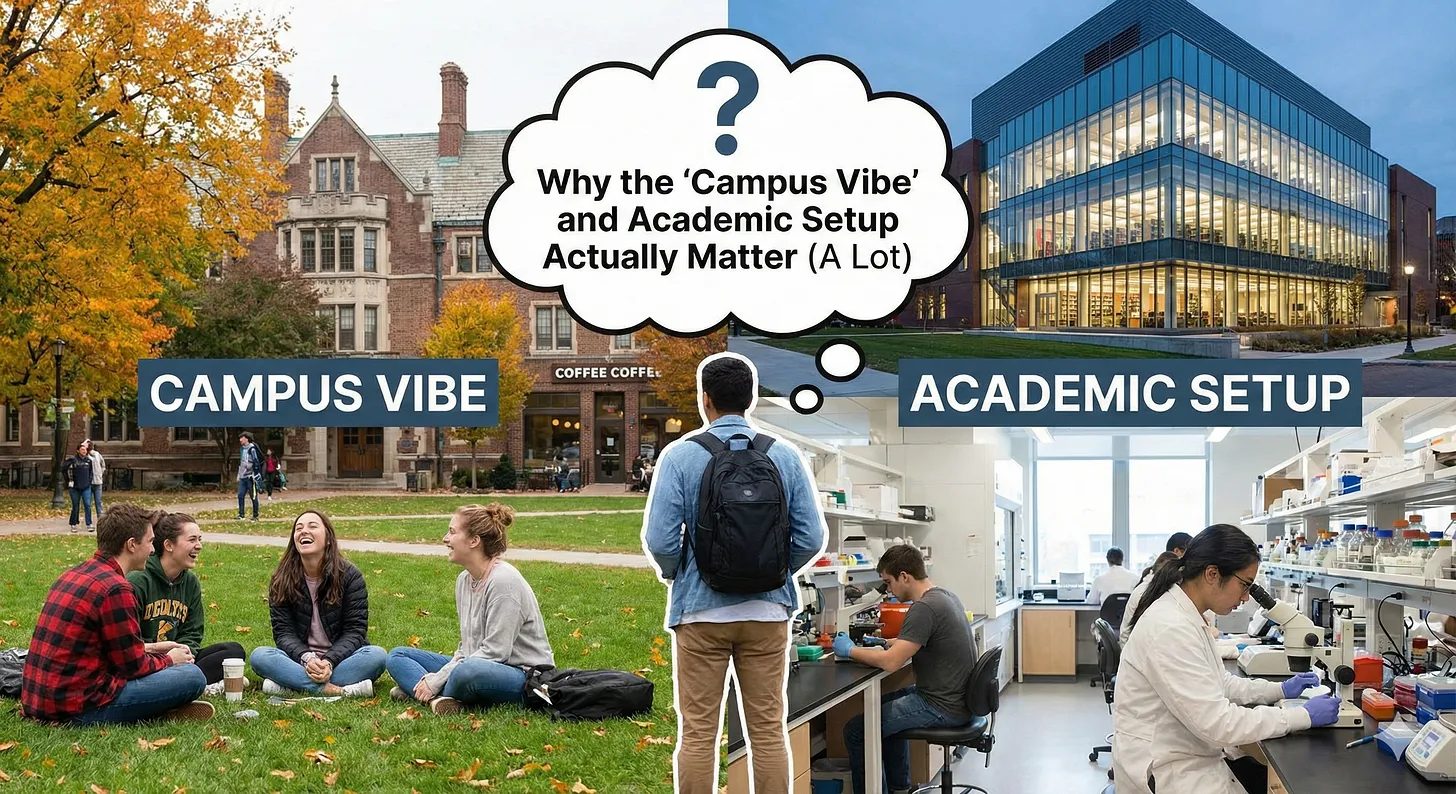
Choosing a good, safe, and reputable college is paramount to success. But it’s not all about cost or location. (It’s not even about security—which can ironically raise red flags of its own.) Two factors can literally make or break a student’s experience: the academics and the campus vibe. If the courses are too rigorous or the school requires too many classes outside of the degree program, students can unnecessarily suffer.
The same holds true for the campus culture. Should it be a mismatch with a student’s personality, it will present a day-to-day challenge. Combined, these two elements can make life miserable and force families into making weighty decisions. So, don’t get caught off guard, and here’s how you can avoid making a huge mistake.
Why Ignoring College Campus Culture and Academic Structure Is a Big Mistake High Schoolers Shouldn’t Make
When you’re a high school senior touring campuses, it’s easy to get dazzled by the enticing amenities: shiny gym, the climbing wall in the student union, or the fact that the dining hall has sushi on Tuesdays. Those things are nice, but the real make-or-break factors for your happiness and success in college are (1) the overall campus vibe and (2) the academic structure. Ignore them at your peril.
1. Campus Vibe: The Invisible Force That Shapes Your Daily Life
“Vibe” sounds fluffy, but it’s the difference between thriving and quiet misery for four years.
- Big state school energy (50,000+ students) feels like a small city. Greek life popping, football Saturdays that shut down the town, 300+ clubs, and constant events. If you’re outgoing, love crowds, and want to reinvent yourself, this is rocket fuel. If you’re introverted or get overstimulated easily, it can feel lonely in a sea of people.
- Small liberal-arts college vibe (1,500–4,000 students) is the opposite. Everybody knows your name (whether you want them to or not), professors invite you to their houses for dinner, and the dorm hallway becomes your lifelong friend group. Amazing if you want a tight community; claustrophobic if you need anonymity.
- Nerd heaven (Caltech, MIT, Carnegie Mellon, Chicago) has a culture where pulling an all-nighter for a p-set is a badge of honor, and Dungeons & Dragons is more popular than frat parties. If you live for ideas, it’s paradise. If you want work-life balance or a traditional “college experience,” you’ll burn out fast.
- Pre-professional factories (NYU, Georgetown, Michigan) are hustle-central: everyone’s interning, networking, and stressing about recruiting calendars sophomore year. Great if you’re laser-focused on Wall Street, consulting, or tech; exhausting if you want to explore or chill.
The vibe also includes politics, partying style, weather, and how welcoming the place feels to people who look/think/pray like you. Visit overnight if you can. Eat in the dining hall. Sit in the library on a Friday night. You’ll feel in your gut within 24 hours whether you belong.
2. Academic Structure: The Hidden Skeleton That Determines Your Day-to-Day
This part gets overlooked because it’s less sexy than a pretty quad, but it’s huge.
- Distribution requirements vs. open curriculum: Brown, Amherst, and a handful of others let you take whatever you want. Heaven for the intellectually curious kid who wants to triple-major in physics, Arabic, and dance. Hell for the undecided kid who needs guardrails.
- Quarter vs. semester system: Quarters (Stanford, Northwestern, Dartmouth) move fast—ten weeks, and you’re done. You’ll take more classes overall, but finals season is brutal, and there’s almost no time to recover from a bad professor. Semesters give you breathing room.
- Class size and teaching focus: At giant flagships, intro classes can have 500 kids and a grad student TA you’ll never meet. At small colleges, your freshman writing seminar might have 12 people and a tenured professor who learns your dog’s name. Research universities prioritize grad students and labs; liberal-arts colleges prioritize undergrad teaching.
- Grading curves and academic intensity: Some schools (looking at you, Harvey Mudd and Princeton in the old days) grade on strict curves where only 25–35% get As. Others are famously grade-inflated. Know your tolerance for competition.
Just keep this in mind: the “best” school on paper can be a terrible for you if the vibe drains you or the academic setup fights the way you learn best. A slightly lower-ranked university where you feel at home and the structure fits your brain will almost always beat a prestigious name that makes you anxious or bored.
So, take the time to tour with your eyes open. Talk to actual students, not just the tour guides. Speak with maintenance crew, security personnel, bookstore employees, and cafeteria staff. Trust your gut. Four years is a long time to be somewhere that doesn’t feel right.
Parents, what have your experiences been with picking a college based on its vibe and academics, and what would you add?
Leave a Reply