
College security is a major concern for parents, so it’s important to know that the campus provides a safe living and learning environment. Here’s how to find out the truth…
College campuses have an unfortunate (but somewhat earned) reputation of being big, never-ending party atmospheres. And with the good times come the bad. Occasionally, things get out of control, and outside intervention is necessary, even to the point that law enforcement must get involved.
Of course, these are extreme situations that result in formal criminal charges. Worse still, at some of these institutions of higher learning, serious crimes, such as break-ins, car thefts, sexual assaults, and more, are more prominent than others, and parents need to know how safe—or dangerous—a school actually is. So, read on to learn what you need to do to find out what’s really going on.
5 Ways Parents Can Gauge College Campus Safety
When your child heads to college, safety is top of mind. Campuses should feel secure, but how do you know? Beyond glossy brochures, proactive steps reveal the real picture and uncover hidden red flags. Here’s an easy-to-follow guide to evaluate campus safety during in-person visits and through online research.
Chat with Current Students
During campus tours, don’t stick to the script—seek out dorm-dwellers. Approach students in residence halls or quads and ask candid questions: “How safe do you feel walking alone at night?” or “What’s the biggest security issue here?” Current residents offer unfiltered insights on lighting, escort services, and peer culture. Tours often include student guides, but linger post-tour to talk to others. Their stories highlight daily realities, such as responsive RA interventions and rare but notable incidents.
Consult On-Site Security Personnel
Security officers are your on-the-ground experts. Request a meeting with campus police or safety directors—many schools welcome this. Inquire about response times, patrol frequencies, and recent trends. Ask: “How do you handle emergencies?” or “What’s your community outreach like?” Their demeanor and specifics signal competence. A proactive team with visible patrols and tech like blue-light phones builds confidence.
Mingle with the Maintenance Crew
For an alternative viewpoint on campus safety, seek out members of the campus maintenance or grounds crew. These staff members are often the first to address the aftermath of security incidents, from removing graffiti and repairing property damage to fixing broken windows after a break-in or vandalism.
Maintenance crew members have a direct, non-official perspective on the frequency and nature of minor and major incidents that may not always be formally reported or emphasized in official security reports. Their candid observations about problem areas, recurring issues, and the speed of clean-up can offer a valuable, ground-level assessment of the campus’s overall security health.
Review the Clery Act Report
Federal law mandates that colleges report crimes under the Clery Act, providing transparent statistics on incidents such as assaults and thefts in residence halls, on campus, and in nearby areas. Find it on the school’s website under “Campus Safety” or via the U.S. Department of Education’s site (ope.ed.gov/campussafety). Scan three years’ data for patterns—compare to national averages (FBI’s Uniform Crime Reporting). But take note that underreporting may occur; so take the time to cross-reference with other sources.
Online Reviews and Local Crime Data
Dig into student forums like Niche.com for aggregated experiences. Search “[school name] safety reviews” to spot red flags. For a broader context, check local police blotters or tools like SpotCrime.com for off-campus trends. These reveal neighborhood risks, like nearby bars or transit safety.
Observe Physical Features and Test the Vibe
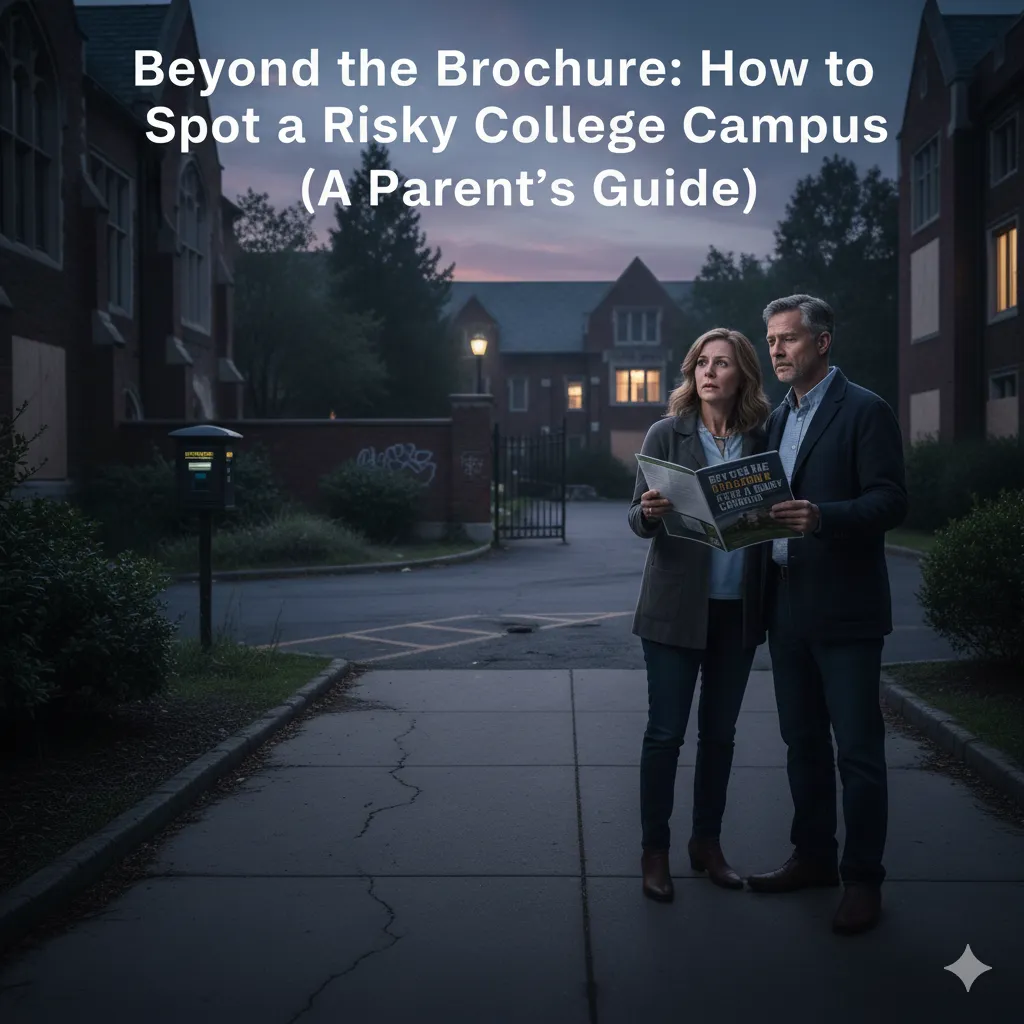
Walk the campus at dusk—good lighting, clear paths, and accessible help stations matter. Note barriers, cameras, and emergency apps. Evening visits expose whether the area feels lively or eerie.
Combining these—student chats for vibe, security talks for ops, Clery for facts, reviews for anecdotes, and eyes-on for intuition—paints a complete portrait. No campus is risk-free, but informed choices empower peace of mind. Prioritize schools where safety is a shared priority.
Parents, what have your experiences been with college campus safety, and what would you add?
Leave a Reply