
When it comes to paying for college, most people think about scholarships and student loans, but what about grants, and how do they help to reduce education expenses?
College is a costly endeavor. But it promises a significant return on investment. However, taking out multiple student loans means racking up considerable debt. So, many families apply for scholarships because these represent “free money,” although they generally ignore grants.
Why?
Well, it comes down to a few factors. So, let’s take a look at both of these types of financial aid, their similarities, differences, and how they can be used to benefit students seeking a degree.
Understanding the Differences, Pros, and Cons of College Scholarships vs. Grants
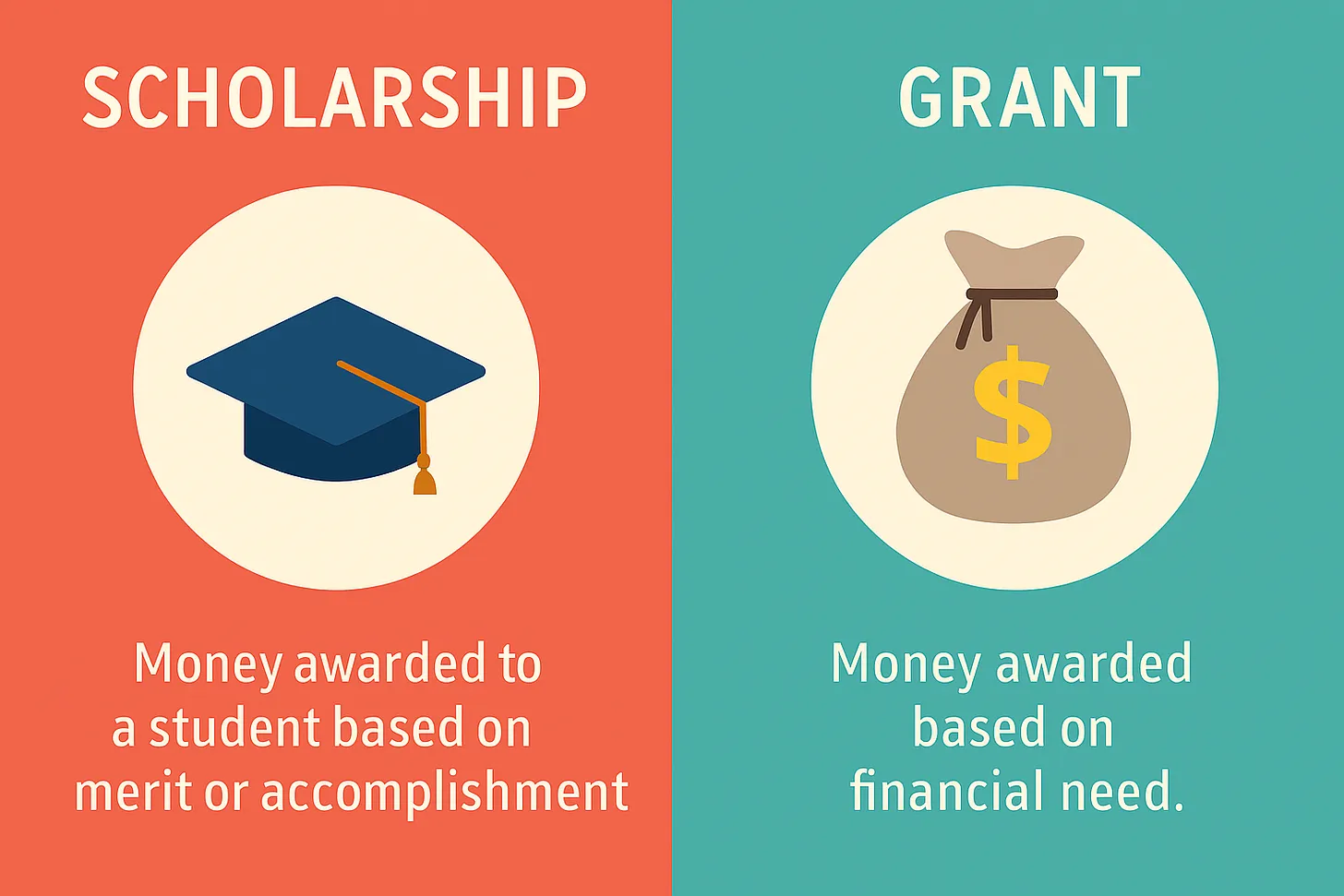
When funding a college education, scholarships and grants are two valuable forms of financial aid that don’t require repayment. While they share similarities, they differ in eligibility, application processes, and implications. Below, we explore the distinctions, along with the pros and cons of each.
What Are Scholarships?
Scholarships are financial awards given to students based on merit, talent, or specific criteria, such as academic achievement, athletic ability, artistic skills, or community involvement. Colleges, private organizations, or individuals often provide them.
Pros of Scholarships:
- Merit-Based Opportunities: Reward students for excellence in academics, sports, or other talents.
- Wide Availability: Offered by diverse sources, including schools, nonprofits, and corporations.
- Prestige: Winning competitive scholarships can enhance a student’s resume or academic profile.
Cons of Scholarships:
- Highly Competitive: Many scholarships have strict eligibility criteria and limited awards.
- Application Effort: Requires essays, recommendation letters, or portfolios, which can be time-consuming.
- Renewal Conditions: Some scholarships require maintaining a specific GPA or participation in activities.
What Are Grants?
Grants are need-based financial awards, typically provided by federal or state governments, colleges, or private organizations. They aim to support students who demonstrate financial hardship, often determined by forms like the FAFSA (Free Application for Federal Student Aid).
Pros of Grants:
- Need-Based Access: Prioritize students with financial need to make education more accessible.
- More Straightforward Application: Often awarded through standardized processes like the FAFSA, reducing paperwork.
- No Performance Pressure: Typically, they don’t require maintaining a specific GPA or extracurricular involvement.
Cons of Grants:
- Limited Funding: Amounts may not cover full tuition or expenses, requiring additional aid.
- Income Restrictions: Eligibility often depends on family income, excluding some students.
- Renewal Uncertainty: Funding may vary year-to-year based on government budgets or institutional resources.
Key Differences
- Eligibility: Scholarships emphasize merit or specific talents, while grants focus on financial need.
- Application Process: Scholarships often require tailored applications, whereas grants are typically awarded through financial aid forms.
- Funding Sources: Grants are more likely to come from government programs (e.g., Pell Grants), while scholarships often stem from private or institutional sources.
Parents, what are your experiences with college scholarships and grants, and what would you add?
Leave a Reply