
With continually rising (and expensive) tuition, housing, and meal plans, why are college dorms not more inviting, better equipped, and comfortable? The answers will surprise you…
One of the most exciting things a family can do is tour college campuses. It’s a fun and inspiring experience. (Sure, bittersweet, too, but still a neat sneak peek into the future well worth viewing.)
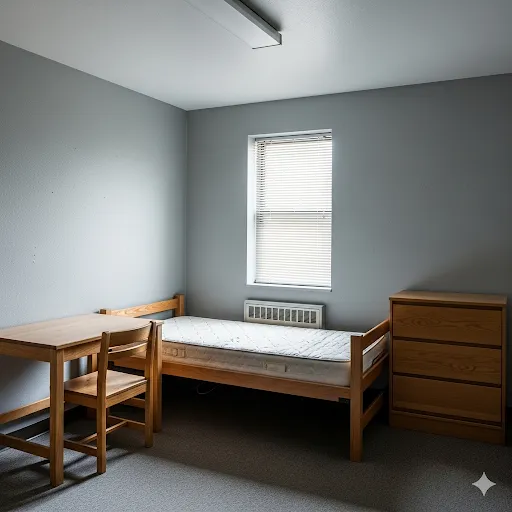
Seeing a campus online or in a fancy, full-color brochure is one thing, but walking through one is entirely different. This first-person encounter presents an opportunity to kick the tires and ask questions that hadn’t occurred to you before. Families can interact with students, administrators, and faculty, see all the amenities, and eat at the cafeteria. It’s a cornucopia of delights. That is, until the dorm tour, which typically isn’t very impressive and often triggers a more critical eye. As someone who has had the experience several times, I can tell you (and my wife would wholeheartedly agree), that most dorm rooms are the lowlight. In fact, I posted about it on X.
But why? What are the reasons universities don’t spruce these student living spaces up and make them more inviting, comfortable, and attractive?
Why College Dorm Rooms Are So Spartan and Drab
College dorm rooms often evoke images of stark, utilitarian spaces: cinderblock walls, basic furniture, and a palette of institutional beige or gray. While some modern campuses boast luxurious accommodations with private suites and high-end amenities, the majority remain decidedly spartan. This design isn’t an oversight but stems from a combination of historical precedents, economic pressures, and practical necessities.
Historically, American college dormitories were never intended to be havens of comfort. For much of higher education’s early history, through the 19th century, many students boarded in private homes near campus because universities lacked the funds to build dedicated housing. When dorms did exist, they were basic—often cramming two or three students into a single room with shared bathrooms for dozens, and no frills like heat or running water. Even into the mid-20th century, as public funding enabled the construction of more on-campus beds in the 1950s and 1960s, these new facilities were described as “lean and ascetic,” prioritizing sheer capacity over student well-being. This no-nonsense approach reflected the era’s focus on education as a communal, disciplined endeavor rather than a personalized experience.
Economics plays a central role in keeping dorms drab today. Universities operate on tight budgets, allocating resources to academic programs, faculty, and infrastructure rather than aesthetic upgrades for temporary student housing. Fancy features would drive up construction and maintenance costs, ultimately raising tuition or room-and-board fees—already a burden for many families. Instead, colleges opt for cost-effective designs that accommodate as many students as possible at an affordable price. In an era of soaring education expenses, keeping dorms basic helps contain overall costs.
Practicality is another key factor. Dorm rooms endure heavy wear from rotating occupants year after year, so they must be built to last. Materials like cinderblock walls and vinyl flooring are chosen for their durability, ease of cleaning, and resistance to damage—qualities that make spaces feel “prison-like” but ensure longevity. Fire safety regulations and building codes further limit options, prohibiting certain wall coverings or electrical setups that could enhance coziness but pose risks. The result? A blank canvas that’s functional but uninspiring, encouraging students to personalize with posters, rugs, and string lights.
In essence, the Spartan nature of most dorm rooms is a deliberate choice rooted in history, frugality, and functionality. While it may start drab, this simplicity invites creativity, transforming a bare space into a temporary home—and perhaps teaching a valuable lesson in resourcefulness along the way.
Parents: What are your experiences with dorm rooms, and what would you add to this article?
Leave a Reply